The Hidden Relationship Between Shame and Anger
Our emotional lives are powerful, complex and often mysterious to our conscious mind. Emotion drives our thoughts and actions, but when we try to examine them we are confronted with a tangle of conflicting and confusing feelings.
Two incredibly influential emotions which are often misunderstood are shame and anger. Often they don’t simply coexist—they cycle back and forth, each one triggering or masking the other. This can leave people feeling confused by their reactions, stuck in repeating patterns, or overwhelmed by emotional swings they don’t fully understand.
Understanding how shame and anger interact can help make sense of emotional reactivity, relationship conflict, and persistent self-criticism. It can also open the door to more effective emotional regulation and self-compassion.

Shame and anger are closely linked emotions, differing primarily in the direction of aggression.
The Quiet Pain of Shame
Shame is an often subtle but deeply painful emotion that centers on feelings of unworthiness, inadequacy, or a sense of failing to meet our own or others standards.
Unlike guilt, which focuses on a specific behavior (I did something wrong), shame targets the self (I am something wrong). This distinction is explored in depth in Healing the Shame That Binds You, which remains one of the foundational texts on understanding how shame becomes internalized and entrenched.
Shame whispers quietly but persistently. Its messages sound like:
I am a bad person.
I always mess everything up.
There’s something wrong with me.
I don’t deserve love.
Because shame is so painful, it often operates in the shadows. People learn early on to hide it—even from themselves. So many people carry an immense amount of shame and—out of that shame—are rarely willing to even acknowledge it much less show it to other people.
When shame is pushed down or ignored, it doesn’t disappear. Suppressed shame tends to intensify over time, shaping how people relate to themselves and others. Left unresolved, it can wreak havoc in our lives—fueling depression, addiction, anxiety, social withdrawal, perfectionism and so much more.
Shame is so powerful and pervasive in most of our lives, that focusing therapy specifically on healing Chronic Shame and Low Self-Confidence can be profoundly effective for improving many seemingly unrelated issues.
The Burning Fire of Anger
Anger, by contrast, tends to surface with intensity and force. It arises in response to perceived threats, injustices, or boundary violations. Where shame lurks quietly in the shadows, anger shouts loudly from the rooftops.
Anger’s message is often clear and direct:
This isn’t okay.
You crossed a line.
I won’t stand for this.
I will make you pay.
At its core, anger is a natural and adaptive emotion. It activates the nervous system, preparing the body to protect itself. When expressed constructively, anger can help people assert boundaries, advocate for their needs, and address harm. It can be a powerful signal that something important matters.
When anger becomes overwhelming or unchecked, however, it can turn destructive. Explosive reactions, chronic irritability, or blame can damage relationships and lead to regret. In these moments, anger may feel out of proportion to the present situation.
The Link Between Shame and Anger
While these two emotions appear very different on the surface, they are connected by an important thread: both of these emotions contain aggression within them.
Anger contains aggression directed outward. While that doesn’t necessarily mean violence or hostility—it means that responsibility for harm is placed externally. Shame, by contrast, contains aggression directed inward. Instead of assigning responsibility externally, the blame is turned on the self. While the aggression contained in anger is more visible, the aggression contained in shame can be just as intense and destructive.
The essential link between these two emotions is that both are a response to emotional pain—what differs is where the blame is placed for that pain and, consequently, where the resulting aggression is channeled.
When Anger Covers Shame
In many cases, anger functions as a defense against shame.
Shame can feel deeply threatening—especially if earlier experiences taught someone that vulnerability leads to rejection, humiliation, or punishment. When shame begins to surface, the nervous system may respond by shifting into anger, which feels more powerful and less exposing.
In these moments:
A small criticism may trigger a strong angry reaction
Defensiveness may appear quickly
Blame may be placed outward to avoid internal collapse
The anger is not random—it is protecting against feelings of inadequacy, failure, or unworthiness beneath the surface. As that shame arises, our system defends itself against the perceived cause of that shame. In effect we’re saying “I’m not bad! You’re bad!”
This phenomenon is seen most often in our interpersonal relationships. Many of us have seen family members or romantic partners respond strongly to perceived criticism with angry outbursts and lashing out.
When Shame Covers Anger
While less obvious, the reverse pattern is just as common.
Some people learned early that anger was unsafe or unacceptable. Expressing it may have led to conflict, abandonment, or escalation. As a result, anger becomes suppressed.
Instead of being expressed outwardly, anger is redirected inward as shame.
In this pattern:
Boundary violations are minimized
Responsibility is taken even when harm was external
Self-criticism replaces self-advocacy
A common but subtle way this happens is through compulsively centering the perspective of those who caused harm. While empathy and understanding are valuable, they can become a way to dismiss one’s own pain. Over time, this pattern often contributes to anxiety, depression, low self-worth, and chronic exhaustion.
The anger doesn’t fully go away either. People who have been consistently suppressing anger over time often find that working on shame and cultivating self-love lead to a surge of deep rage and anger. This can be frightening and deeply unsettling, but actually demonstrates that they are starting to really value and love themselves.
This phenomenon is especially common for women, who are socialized to believe that anger is inappropriate for them. In this way, there is a Hidden Gift to Feminine Anger.
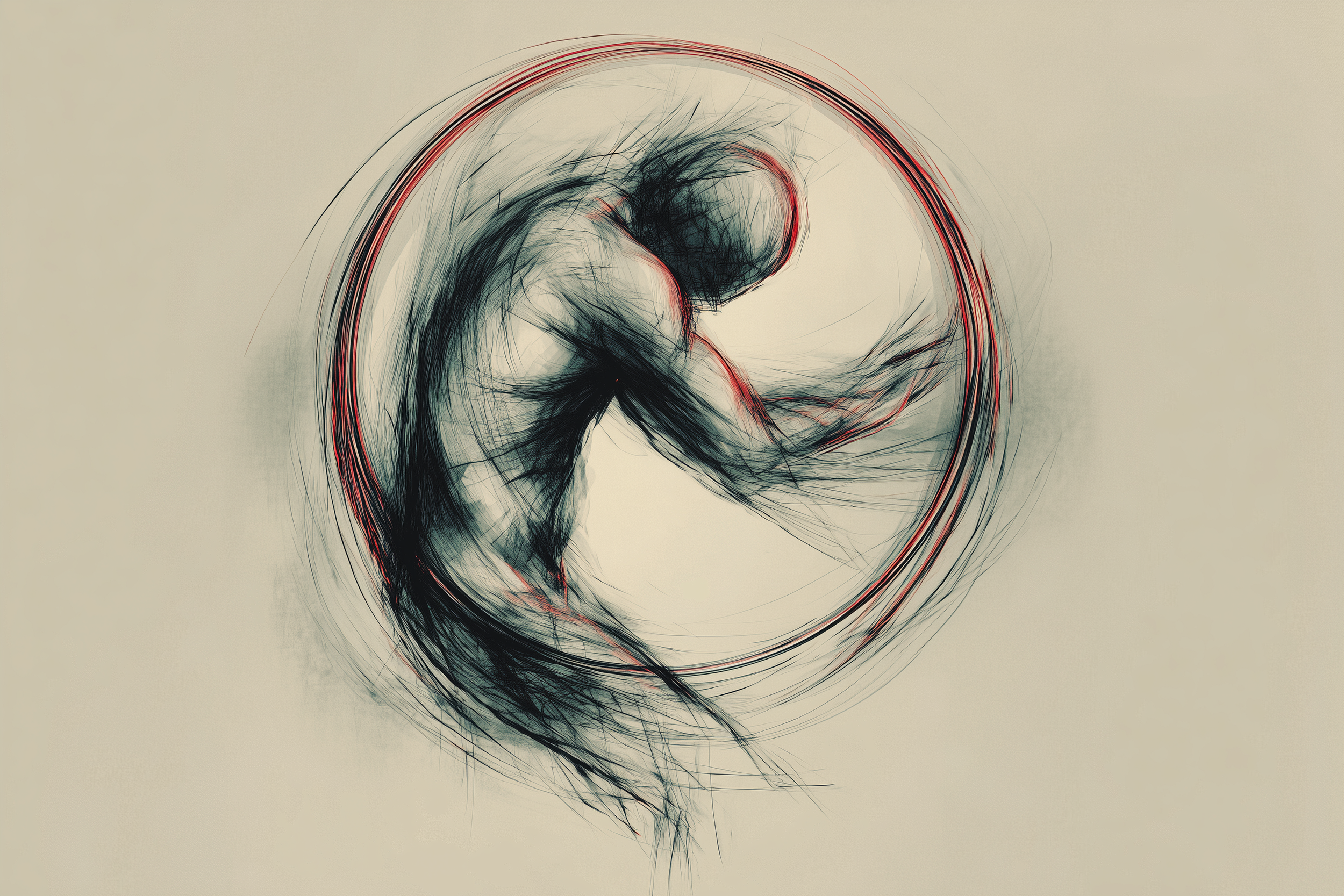
Shame and anger often form a repeating emotional loop, cycling between inward collapse and outward reaction.
The Shame-Anger Cycle
For many people, shame and anger form a repeating loop:
Anger arises in response to hurt or threat
Shame follows for having felt or expressed anger
Shame builds through self-criticism and suppression
Anger resurfaces as tension, irritability, or resentment
This cycle is common in close relationships—especially amongst those with significant trauma histories and attachment wounds. It can feel confusing and exhausting for everyone involved.
It is all just emotional pain and aggression, struggling to figure out where to go. Unless it eventually is channeled in the proper direction and really felt, this energy stays stuck in the system—building self-criticism and resentment.
Moving Toward Awareness and Integration
Healing doesn’t mean eliminating shame or anger. It means learning to notice them, understand what they’re protecting, and respond with greater choice.
This often involves:
Separating identity from behavior to soften shame
Learning to feel anger without acting it out destructively
Recognizing whether aggression is turned inward or outward
Meeting both emotions with curiosity rather than judgment
Over time, as shame becomes more tolerable, anger no longer needs to act as armor. As anger becomes safer to feel, it can return to its role as a boundary signal rather than a weapon.
Experiential modalities, like Somatic Therapy or Internal Family Systems, are particularly well-suited to this work.
A More Compassionate Relationship With Both Emotions
Shame and anger are not enemies. They are signals—often shaped by past experiences—that something important is at stake.
Shame points to a fear of disconnection.
Anger points to a need for protection or repair.
When these emotions are understood rather than suppressed, they lose some of their intensity. In their place, people often discover a steadier sense of self-worth—one that doesn’t depend on being perfect or being right, but on being human.
Does this Resonate with You?
Do you find yourself with cycles of shame, anger, or emotional reactivity? My approach to therapy can help you understand what these emotions are protecting—and how to work with them rather than against them.
Schedule a free consultation to explore whether this work feels like the right next step.