Can Psilocybin Cure Depression? What the Science says so far
In recent years, psilocybin—the active compound in “magic mushrooms”—has captured attention as a potential breakthrough in mental health care. Clinical trials have reported striking reductions in depression and anxiety symptoms, sometimes after just one or two carefully guided sessions.
For anyone who has struggled with depression, the idea that psilocybin could cure it sounds almost miraculous. But can it really?
The truth is more nuanced. The research so far is highly promising, but psilocybin isn’t a quick fix—and calling it a “cure” misses what makes it powerful in the first place. Let’s unpack what scientists have found, what they haven’t, and why the healing process depends just as much on support, preparation, and integration as it does on the medicine itself.
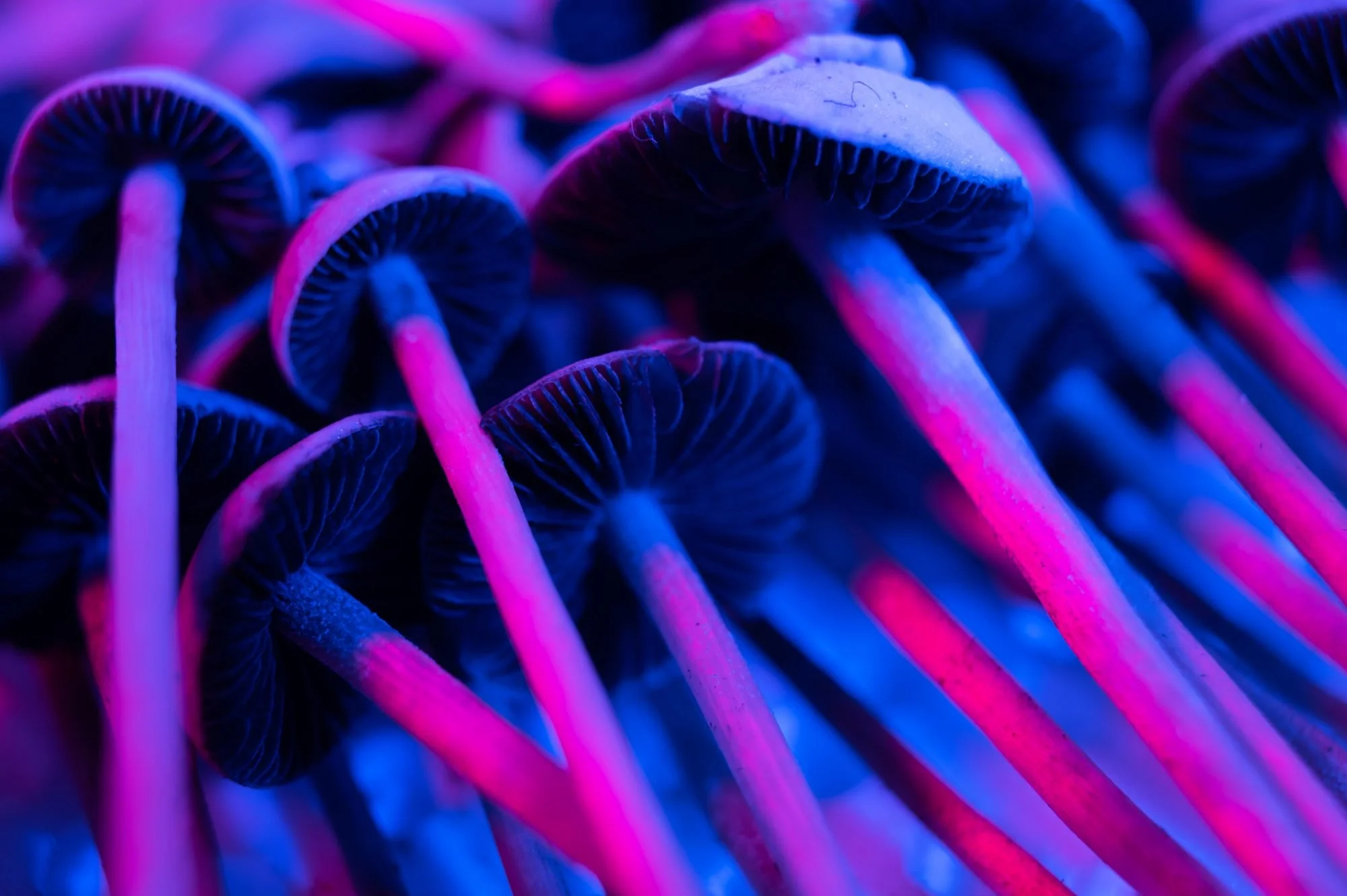
Psilocybin—the active compound in “magic mushrooms”—is being studied as a potential breakthrough therapy for depression.
What the Research Shows About Psilocybin Therapy
Over the past decade, world-class research centers like Johns Hopkins University, Imperial College London, and NYU have studied psilocybin-assisted therapy for Major Depressive Disorder (MDD) and treatment-resistant depression.
The Results So Far
A 2023 JAMA study found that a single 25 mg dose of psilocybin, paired with psychological support, led to rapid and lasting reductions in depression scores over six weeks—without major side effects. Importantly, improvement went well beyond what was seen in the placebo group.
Johns Hopkins did a longer-term study in which participants received structured support plus two psilocybin sessions. About 75% showed significant improvement after treatment, and nearly 50% remained in remission at 12 months, demonstrating durable effects. Average depression scores dropped from “severe” to “mild or none” in nearly all participants.
In a 2021 Imperial College study comparing psilocybin to the antidepressant escitalopram (Lexapro). Both groups improved, but those on psilocybin reported greater emotional relief, increased sense of meaning, and stronger feelings of connection. Brain scans indicated that psilocybin “opened up” communication between segregated regions in depressed brains—an effect distinct from conventional SSRIs.
Across studies, most participants experience significant relief—sometimes described as “years of therapy in a day.” But these effects only occur when psilocybin is administered in a structured, therapeutic environment with trained facilitators.
It’s important to note that this doesn’t mean psilocybin can’t be beneficial outside of a clinical trial. Many people report deep healing and growth through personal or ceremonial use. However, the results we’re discussing here come only from controlled research settings—with extensive screening, safety protocols, and professional guidance.
Outside of those conditions, the risks of adverse outcomes—such as panic, confusion, or retraumatization (“bad trips”)—are significantly higher. Structure, training, and support make a profound difference in both safety and outcome.
How Psilocybin Appears to Work
The mechanistic explanations remain under investigation, but a few ideas are prominent:
Psilocybin acts as a 5-HT2A receptor agonist and appears to promote neural plasticity, altering functional connectivity among brain networks (e.g., default mode network) and potentially “resetting” maladaptive patterns of brain activity.
Some authors propose that psilocybin can enable a “loosening” of habitual negative cognitions or rigid mental loops, thereby opening a window for psychological insight, emotional reprocessing, or cognitive reframing.
The therapeutic alliance(i.e. the relationship between participant and facilitator) also appears to play a role: in one psilocybin-assisted therapy trial, measures of alliance increased from preparation to post-treatment, and stronger alliance correlated with better outcomes.
The “psychedelic experience” itself—its subjective intensity, mystical-type qualities, emotional breakthrough, or sense of connection—often correlates with clinical improvements (though this relationship is not 1:1).
So, while psilocybin seems to exert a powerful neurobiological perturbation, its therapeutic efficacy is likely inextricable from the psychological, relational, and contextual scaffolding around it.
Why It’s Not a “Cure”
Even with such impressive results, psilocybin is not a magic pill. The word “cure” suggests something permanent and effortless—but emotional healing rarely works that way.
Here’s why researchers (and ethical therapists) are cautious about that term:
1. Participants Are Carefully Screened
Clinical studies only include people who are psychologically stable enough to handle intense inner experiences. They exclude anyone with:
Individuals with active suicidality or self-harm risk
Patients with psychotic disorders, bipolar I disorder, or a first-degree family history of schizophrenia
Individuals with significant substance-use disorders or severe comorbidities
Patients with highly unstable medical conditions
Individuals with personality disorders or high levels of emotional dysregulation
Anyone currently taking any psychiatric medications like SSRIs or anti-psychotics
This means the research doesn’t tell us much about how psilocybin therapy might work for people with more complex or higher-risk profiles—the kind of cases most therapists see in real life.
2. Studies Are Small and Short
Many trials are small (dozens, not hundreds or thousands), which limits the generalizability of their findings. Some follow-up durations are modest (weeks to a year), so we don’t yet know what happens over the long term—whether benefits fade or need ongoing support to maintain.
There are widespread differences in dosing regimens, psychotherapy protocols, set-and-setting approaches, and outcome measures across trials, making it difficult at this point to determine the most efficacious approaches to psilocybin therapy.
3. Set and Setting Are Everything
Psilocybin doesn’t work in a vacuum. In every study, participants receive:
Multiple preparation sessions with trained therapists
A calm, supportive environment for the journey itself
Integration sessions afterward to help make sense of the experience
This container is crucial for both safety and depth of healing. Without it, psilocybin sessions can be confusing or even distressing.
4. Not Everyone Experiences Relief
While average outcomes look promising, not every participant benefits from psilocybin therapy. Across studies, some people experience little to no change in their depression scores, and a small number even report temporary emotional worsening.
These are statistical trends, not guarantees. Clinical trials measure group-level effects—how psilocybin performs on average compared to placebo—but those numbers can’t predict how any one person will respond.
Individual factors like trauma history, neurochemistry, emotional readiness, and the skill of the facilitation team all shape outcomes. That’s why it’s so important to approach psilocybin therapy with realistic expectations and proper guidance, not certainty of success.
5. The Medicine Doesn’t Do the Work for You
Psilocybin can open doors—but you still have to walk through them.
It can reveal patterns, emotions, or memories that need attention, but integration—talking through the experience, making meaning, and changing habits—is where the real healing happens.
As one participant in a Johns Hopkins study said, “The medicine showed me what was possible, but therapy helped me live it.”
6. Miraculous “One-Session Cures” Are Rare
Yes, some people experience dramatic, lasting shifts after one session—but those are exceptions, not norms.
Most people need multiple sessions, continued therapy, and daily practices (like mindfulness, journaling, or movement) to sustain their gains. Psilocybin is better seen as a powerful catalyst, not a destination.

During psilocybin-assisted therapy, clients typically rest with eyes covered in a calm, supportive setting while facilitators guide the process.
What Healing With Psilocybin Looks Like
A psilocybin-assisted therapy process typically includes three key stages:
Preparation: Meeting with trained facilitators or therapists to discuss mental health history, goals, fears, and intentions. This builds safety and trust.
Journey: A guided psilocybin session in a comfortable, private setting with music and therapeutic support throughout.
Integration: Follow-up sessions to explore insights, emotions, and any changes the experience inspires.
This process mirrors what many somatically oriented therapists already know: that healing requires both insight and embodiment. To make meaning out of profound experiences, the nervous system must learn to stay connected and grounded—something psilocybin alone can’t do.
The Importance of a Structured Therapeutic Container
Because psilocybin can amplify emotions and memories—both beautiful and painful—a supportive structure is non-negotiable.
Depression often involves isolation and disconnection. A skilled guide or therapist helps ensure that what surfaces during a psilocybin journey can be met with compassion, processed safely, and integrated meaningfully.
That’s why even as states like Oregon and Colorado begin to legalize psilocybin services, professional organizations stress the importance of trained facilitators, ethical guidelines, and integration therapy as part of the process.
Healing vs. Curing
The idea of a “cure” implies something broken that can be permanently fixed. But depression is rarely one-dimensional—it’s a complex interplay of biology, trauma, relationships, and environment.
Psilocybin can’t erase your past or guarantee lifelong happiness. What it can do is help you reconnect with your own inner wisdom, break free from looping thoughts, and remember your capacity for joy and connection.
Healing through psilocybin looks less like being “fixed” and more like learning to live differently—with greater compassion, awareness, and authenticity.
The Road Ahead
The field of psychedelic-assisted therapy is evolving quickly. Large-scale studies are underway, and psilocybin may soon receive FDA approval for depression treatment.
Still, questions remain:
How long do the effects last?
Who benefits most—and who should avoid it?
What are the best ways to ensure safety and accessibility?
Until we have those answers, psilocybin therapy should be approached with the same respect you’d give any powerful tool: with preparation, intention, and skilled support.
So, Can Psilocybin Cure Depression?
Not exactly. But it can create the conditions for healing in a way few other treatments can.
It can help you rediscover hope, loosen the grip of despair, and open the heart to connection again. But it works best when paired with therapy, mindfulness, community, and continued self-work.
Psilocybin isn’t a cure—it’s a collaborator in your healing process.
Ready to Explore Psilocybin-Assisted Therapy?
If you’re curious about how psilocybin therapy might support your healing journey, you can learn more about the process—including preparation, facilitation, and integration—on my Psychedelic-Assisted Therapy page.
There, you’ll find resources about what to expect, how I work with clients under Colorado’s Natural Medicine Health Act, and what it means to approach this medicine safely and ethically.