How Can Mindfulness Help?
Daily mindfulness practices have made a profound difference in my own journey toward wellness. I’ve long struggled with intrusive negative thoughts — distracting myself all day, telling myself they weren’t true — yet they never seemed to go away. Over time these thoughts wore me down and colored my entire day. I tried many solutions, but nothing has been as effective as cultivating mindfulness. As such, integrating mindfulness has become a cornerstone of my therapeutic approach.
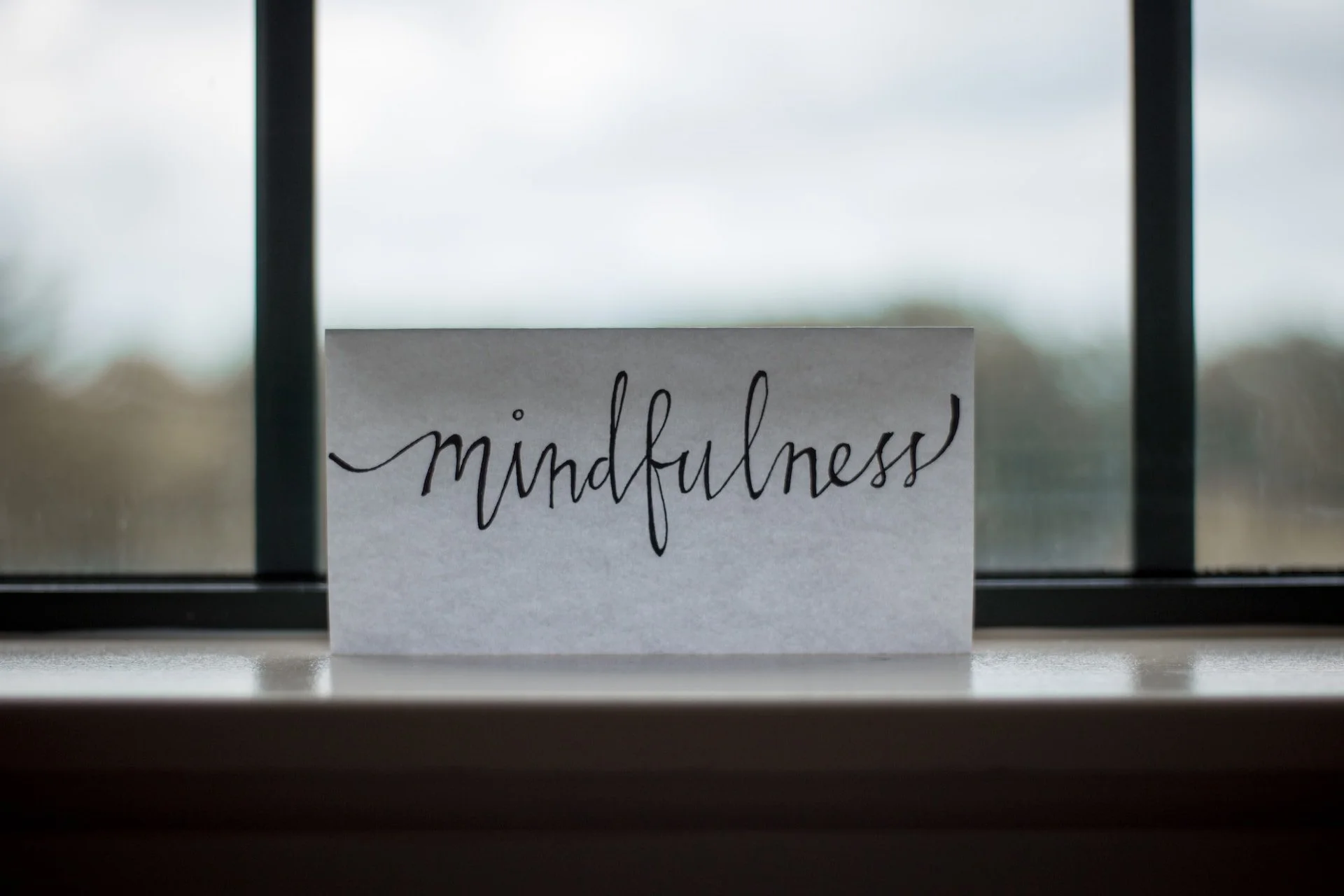
Mindfulness begins with noticing the present moment.
What is Mindfulness?
Put simply, mindfulness is the cultivated, non-judgmental awareness and acceptance of whatever is happening in the present moment. Rather than dwelling on the past or worrying about the future, mindfulness invites us to fully experience what is happening right now.
So… what is happening right now? Take a moment:
Feel the sensation of the air on your skin.
Notice the chair supporting your body.
Listen to any sounds around you.
Thoughts tend to direct our minds to the past or future — but sensations always dwell in the here and now.
“Pain is inevitable; suffering is optional”
Meditation and Mindfulness: What’s the Difference?
“Meditation” refers to a broad set of practices often used to cultivate mindful awareness. There are many different forms of meditation—each with a strategy for cultivating a specific kind of attention. The breath is a common focus because it is always present and always happening in the now.
Personally, focusing on the breath alone didn’t work for me (it felt too boring!). In therapy, I’m agnostic about which sort of meditation my clients choose. I support whatever practice works for you. The best kind of meditation is the one you can do consistently.
Getting Started: Small Steps, Big Impact
I recognize how difficult it can be to start and maintain a meditation practice. I myself started and stopped many times before I found something that worked. Now I’ve developed many ways to customize meditation so it meets the needs of your specific mind. We’ll work together to find ways to incorporate mindfulness and meditation that are effective for you when you’re ready.
Here are a few practical tips:
Begin small: if 20 minutes feels unrealistic, try 5.
If you can’t sit still for 5 minutes, try a walking meditation.
If focusing on bodily sensations is hard, try a mantra.
The key is consistency, not perfection.
Another important thing to remember: your intrusive thoughts are not an indication that you’re doing meditation “wrong.” Minds wander—that’s just what they do. Over time, as you cultivate mindfulness, your thoughts may decrease—but what really changes is your ability not to take them so seriously.
You begin to see that you are not your thoughts. Thoughts flow through awareness all day. Some deserve listening; most do not.

A quiet moment of mindfulness—cultivating presence, gratitude, and gentle awareness.
Accepting Pain: A Mindfulness Perspective
A crucial concept from Buddhism that I bring into my practice is this: pain is an unavoidable part of our human life, but suffering about that pain is optional.
We will all:
Have things we don’t want.
Want things we don’t have.
Be around people we don’t like.
Lose people we love.
Get sick, age, and eventually die.
All of these are painful and inevitable. What becomes clear with meditation is that none of these things are as painful as our resistance to that pain.
Wishing for situation to be different, pitying ourselves, holding resentments—these are forms of suffering we generate ourselves. Through dedicated practice, we can choose to relate to our pain differently and, in doing so, suffer much less.
If we deeply accept that pain cannot be entirely avoided or suppressed, we may even find a kind of gratitude for it. Not only is pain part of our time here—it is essential to it. If you weren’t suffering, what motivation would you have to heal? To understand yourself? To improve?
Pain is unavoidable; moreover, it is what makes us human. We therefore have a choice: to resist that pain and suffer, or radically accept it with deep self-compassion. Paradoxically, it is only once we find this acceptance that our suffering actually diminishes—acceptance makes pain less painful. Mindfulness requires both non-judgemental awareness of the present moment and a radical acceptance of whatever that moment contains. It is with acceptance that healing can truly begin.
You Don’t Need to Take My Word for It
I realize these ideas may feel alien at first—they certainly did for me. Over time and with practice, they have become central tenets of my worldview. The way out of suffering is, paradoxically, to stay with our pain. But I’m not here to convince you—rather, as a mindfulness-based therapist I will gently encourage you to sit with your experience and come to your own conclusions.
Try This: A Guided Loving-Kindness Meditation
Here’s a a simple but powerful guided meditation–one of my personal favorites. It’s a great entry point into cultivating compassion for yourself and for others:
benefits of mindfulness: Backed by Research
Systematic reviews show that mindfulness-based interventions (MBIs) “consistently outperform non-evidence-based treatments and active control conditions” in reducing anxiety and depression.
Studies also show that Mindfulness meditation programs can improve well-being, behavioral regulation, and reduce emotional reactivity.
The Mayo Clinic lists multiple benefits of meditation: improved attention, decreased burnout, greater acceptance of thoughts and feelings, better sleep.
Similarly, guided loving-kindness meditation has been shown to enhance positive emotions, empathy, and reduce negative emotional states (Hoffman et al., 2011).
In short: integrating mindfulness into your life can have real, meaningful impact on mental health.
How I Use Mindfulness in Therapy
In my therapy practice, mindfulness is not treated as an optional “extra”—it’s woven into how we engage with thoughts, feelings, and behaviors.
We identify habitual patterns of intrusive thoughts and the resistance that sustains them.
We apply mindful awareness to observe those thoughts, rather than fight them.
We practice gentle acceptance and self-compassion—especially when the mind wanders or when pain arises.
We adapt a meditation practice to suit you—whether sitting, walking, mantra, or something else entirely.
We situate mindfulness in the therapy process, not only as a standalone exercise but as part of your healing journey.
Ready to bring mindfulness into your healing journey?'
Mindfulness is not a quick fix. It is a skill—one you cultivate, practice, stumble through, adapt, and revisit. It is a process. Yet the transformative potential is genuine: showing up for your experience, without judgement, with acceptance—and realizing that you are not your thoughts.
If you’re feeling stuck in intrusive thoughts, overwhelmed by your mind, or simply wanting a different way to relate to your experience—let’s explore mindfulness together.
Learn more about my approach to Mindfulness-based Therapy.
Schedule a free consultation today to explore how mindfulness-based therapy can help you cultivate calm, clarity, and self-compassion in your everyday life.